Showing posts with label psychology. Show all posts

Tuesday, February 06, 2007

When Theory Met RE

A most unusual paper on videogames is making the rounds, starting on Game Career Guide and eventually being broadcast to the masses at Kotaku. The content is not particularly remarkable game-wise: it is a look at horror franchise heavyweights Resident Evil and Silent Hill. No, the paper is unusual because it brings some dense, psychoanalytically-informed critical theory to bear on a medium which, as far as I know, has remained outside of a lot of such academic mincing.

The paper, Saving Ourselves: Psychoanalytic Investigation of Resident Evil and Silent Hill, by Marc Santos and Sarah White, analyzes the way that the Silent Hill games play on conventions established by the Resident Evil games. Unless you have Four Fundamental Concepts of Psychoanalysis on your beside table, you might have trouble gleaning much more than that from the article. Try this on for size:

In Resident Evil, we defend symbolic order by killing monstrous zombies. Part of these games' terror stems from approaching that which challenges our own symbolic economies-the Real, the abject vilified maternal that threatens the paternal psychological structures upon which subjectivity is founded.
Does this mean the games are scary because shit jumps out at you? Because that’s where most of the terror comes from, honestly.

Okay, I joke. I don’t want to knock this paper too much because I love academic study of games. That, and I don’t really understand a lot of the content. Plus, I don’t think this paper is meant to inform gamers, seeing as how very few people have spent a lot of time with both Silent Hill and Freud’s Beyond the Pleasure Principle. More likely, the paper is intended for the critical theory circles in which sentences like the above can be read with interest (and comprehension). From my (limited) vantage point, I can say that it is written with humor and affection, so I say more power to ‘em.

CONTINUE READING...

Monday, February 05, 2007

The Super Bowl, Monster Brawls, And Your Brain


This was my favorite of the Super Bowl ads. I've seen funnier/more interesting/more useful ads in my time, but this one had me smiling. I liked the giant monster and robot man-in-suit rumble. The music was fun. Oh, and it reflected my deep malaise and discomfort about the violence of the Iraq war.

Wait, no it didn't. Yet the New York Times today has a ridiculously over-reaching analysis of the Super Bowl commercials which claims just that. The headline says it all: "Super Bowl Ads of Cartoonish Violence, Perhaps Reflecting Toll of War." Every little hint of slapstick humor in last night's commercials is seen as embodying feelings about the war. Although the above ad seems most clearly aimed at a nerdy demographic of greasy dudes who like Grim Reaper and Godzilla, Stuart Elliott, the NYT writer, decides the ad was "reminiscent of a horror movie." Sure, if you're willing to massage the evidence to fit your preconceived conclusion.

Keep reading for a discussion of your brain on Super Bowl ads.

Here's a more interesting analysis of some Super Bowl ads: hook viewers up to a NMRI machine and see how their brains react to the different commercials. I'm not sure about the actual scientific relevance of this. I seriously doubt that you can read too much into these NMRI results. But I found it interesting that one ad that Elliott singled out for praise, a General Motors ad about a assembly line robot with mad Johnny-Five-is-alive stylee, elicited anxiety in viewers.

The researchers behind the NMRI study say people noticed the ad, but their brains showed fear. Particularly, the subjects has increased activity in their amygdala (a brain region associated with anxiety and fear). The researchers guess that the fear is related to people experiencing job anxiety and economic insecurity. Exactly. As I watched that ad with my brother, I said to him, "Remember when we were growing up around Detroit, and everyone was talking about how those robots were stealing people's jobs? Now we're supposed to empathize with them?"

Apparently, the Federline burger-flipping ad had the same effect. I didn't feel anxious watching that one, though. My amygdala must have been hypnotized by his insane flow.

CONTINUE READING...

Friday, November 10, 2006

Has Freud Really Fallen?

Writer Denyse O'Leary, a specialist in religiously-motivated critiques of established science, has started a new blog, the awkwardly titled Mindful Hack. She had recently teamed with William Dembski on Uncommon Descent, the blogospheric home of Dembski's religiously-motivated attack on evolutionary biology. Her new blog promises the same quality "science journalism" in the realm of neuroscience.

O'Leary's first post is a premature celebration of the "fall" of Sigmund Freud. Creationists love to group Freud, Darwin, and Marx as some imaginary super-team of materialists. According to their logic, Marx and Freud have been discredited, and Darwin will soon join them. Any educated, reasonable person would of course object to this. Darwin is unimpeachable today. Furthermore, although every nominally Marxist country is truly a mess, Karl Marx the political philosopher is by no means discredited. And certainly Sigmund Freud is alive and kicking in the world of psychology. Please read on.

Freud-haters love to point to excesses that have been committed in his name, things like the recovered memory movement, and gleefully declare Freud is dead. The problem is, they are simply wrong. I know plenty of working psychologists, both in hospitals and private practice, who trace their theoretical orientation directly to Freud.

Of course, many of Freud's theories have been changed over time. He even tinkered with his ideas over his lifetime. Personally, I feel like Freud erred in being too explicit in his theories. He really felt like he was coming up with a universal science of the self. Most psychologists now consider things like penis envy to be silly elaborations of Freud's own fixations.

Yet Freud laid the foundation for a theory of personality that has yet to be surpassed. Does anyone really doubt that our emotional reactions to people and situations come from a mess of internal conflicts, some of which we are unaware of at the time? Does anyone doubt that infants approach the world and in particular their parents with a tangle of needs and desires, and that their early experiences with having these desires met or not met create expectations--again, many of which are unconscious--that shape a personality for life? These are contributions from Freud's thinking.

Psychology, practiced as such, is not a science as much as a working philosophy based on a practical understanding of the brain, namely that any process of mind is rooted in the biological brain and what happens to it. Religious people, of course, hate this because it conflicts with their absolutely unsupportable belief in god-given spirit. So, like O'Leary, they latch on to straw-men arguments, blaming Freud for excesses like the satanic-abuse/recovered memories hysteria (which, ironically, was very popular in populations suffering from the god delusion).

I wonder: do religious types have any viable alternative theory about how personalities form and develop? And would those believers in the immaterial spirit really be happy if neuroscience, the real academic challenge to Freud, were to replace social/developmental approaches with a more genetically-based one?

CONTINUE READING...

Wednesday, October 18, 2006

Why Is It Raining Rain Men?

What causes autism? TV? Havin’ smart parents ‘n’ stuff? A couple of crazy new theories dropped this month to explain the spike in autism diagnoses we’ve been seeing over the past couple decades.

On his relatively new Discover-based blog, John Horgan covers the hypothesis that the qualities that make successful science-y types can lead to autistic children. In Slate, Gregg Easterbrook says TV might turn kids autistic.

As for the first idea, first reported in IEEE Spectrum, a British researcher hypothesizes that autism is an extreme version of a normal human trait called systematizing, the tendency to focus on grouped things and patterns in the world. Scientists and engineers have this trait, and they are meeting and mating more than ever, suggests Simon Baron-Cohen.

In the Slate piece, Gregg Easterbrook—who can always be counted on for a blood-pressure-raising crazy piece of science journalism—trumpets new research suggesting that watching TV before age three is linked autism. However, a quick glance at the new research reveals that it is a non-peer-reviewed work by some economists. This is not immediately damning, but raises those red flags. I’m no fan of Easterbrook, so I did appreciate the wild take-downs in the Slate comments. Actually, many of the comments rip into what seems like pretty shoddy research. I’m not surprised Easterbrook is giving high-profile attention to such problematic stuff. He’s a quite poor science writer.

For my part, I’m still not convinced that autism is one thing, biologically speaking. As I say in the comments section of Horgan’s blog:

Autism seems to be a bit of a trash-can diagnosis. I've often thought that so-called high-functioning autistic people were just extreme types of normal human ways of being. This would be consistent with the systematizer theory. However, some people classified as autistic seem to be so disabled, unable to talk, unable to live independently, that I wonder if their "disease" has different underlying causes than the higher functioning individuals. It is harder for me to see the more severely disabled folks as just being outliers in a normal distribution. This is a problem I have when trying to understand possible causes for all sorts of spectrum disorders.


CONTINUE READING...

Tuesday, August 29, 2006

You Don't Know Me

I'm busy this week. (Definitely too busy for long or thoughtful posts.) Busy and stressed. This makes me anxious, and anxiety makes me depressed. I'm glad I can count on the books I read to let me know I'm not alone, or rather, that I am alone and you are too. Together in our aloneness.

From Psychoanalysis: The Impossible Profession by Janet Malcolm, a writer I admire very much.

The phenomenon of transference—how we all invent each other according to early blueprints—was Freud’s most original and radical discovery. The idea of infant sexuality and of the Oedipal complex can be accepted with a good deal more equanimity than the idea that the most precious and inviolate of entities—personal relations—is actually a messy jangle of misapprehensions, at best an uneasy truce between powerful solitary fantasy systems. Even (or especially) romantic love is fundamentally solitary, and has at its core a profound impersonality. The concept of transference at once destroys faith in personal relations and explains why they are tragic: we cannot know each other. We must grope around for each other through a dense thicket of absent others. We cannot see each other plain. A horrible kind of predestination hovers over each new attachment we form. “Only connect,” E.M. Forster proposed. “Only we can’t,” the psychoanalyst knows.

CONTINUE READING...

Wednesday, August 02, 2006

This Is Your Heart on Videogame Violence


A group of scientists report that videogames desensitize people to violence, and an economist, Edward Castronova, issues a critical beatdown to their statistical methods. I was led to the discussion from an anthropology blog post that my human-ape sex lovin’ friend sent me, and I can’t resist adding my take. The new research does indeed seem sloppy and, I think, quite biased.

At this point, I don’t know tons about the research into the effects of media on violent behavior, but I do know that I love plenty of violent games and I haven’t been in a fight since 1986. Of course the anecdotes about something like the Columbine killers’ love for Doom don’t say squat about a game-violence link, and neither does my passivity.

But academic studies like this new one link things like physiological arousal to violent games pretty clearly. The question then becomes, do these links tell us anything about violent behavior? And it seems to me that they do not.

In the new report, The effect of video game violence on physiology desensitization to real life violence, subjects play either a violent game like Duke Nukem or a non-violent game like 3D Munch Man (wha?!) After playing the games, they watch videos of violent events like jailhouse stabbings.

Over the course of the activities, researchers monitored signs of physiological arousal like heart rate and galvanic skin response. They find that both violent and non-violent games aroused the subjects, as did watching the violent videos. However, the violent game players were less aroused by the videos and, therefore, the researchers surmise, desensitized.

To me, this is not surprising. Although it can be a slippery concept, in general desensitization should be a simple physiological fact. Expose an organism to a certain kind of stimulus and it’ll show a decreasing response. It’s called habituation. It shouldn’t matter much whether we are talking about rubbing the siphon of the sea slug aplysia or making people view representations of violence.

But the really poorly explored assumption in this paper is that desensitization to violence is inherently bad or dangerous. The researchers write, “desensitization of children and other civilians to violent stimuli may be detrimental for both the individual and society.” Maybe. But this has to be proven. It is fine to say desensitization might cause people to ignore victims of violence in real life. But even in their discussion the authors write, “the link between desensitization and helping behavior has not been as carefully examined [as other factors that might decrease helping].”

Devil's advocate time: what if desensitization is good? Just as an example, maybe people who are desensitized to violence are better able to help because they don’t panic. Or what if desensitization is short lived, just as habituation can be in sea slugs? But really, I suspect it is just neutral. After all, slightly slower heart beats don’t allow people to be violent or ignore those in need. Such violent and calloused people have much bigger, deeper problems, problems not caused by videogames.

CONTINUE READING...

Friday, July 21, 2006

Forget Calvin. This is Rousseau and Hobbes.


From the Daily Telegraph in the UK (via BoingBoing) comes this tale of Oxana Malaya, a Ukranian woman who “was brought up by a pack of dogs.” Super interesting. Super weird. And super sad. But I put the scare quotes up there because I also think these situations are super complicated and often get discussed with a distorting simplicity.

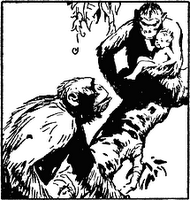
I think stories of feral children, kids raised by wolves or, like Tarzan, by apes, are fascinating because they lay bare a basic human need, the need to be nurtured and loved, and juxtapose it with a perveted form of society in which animals distort our humanity. And although the temptation to draw a lot of meaning from these stories is strong, I don’t think the reality reveals anything too deep about our human character. It certainly doesn’t, as the Telegraph story puts it, “resolve the nature-nurture debate.”

One thing the story of Malaya does well is explode the fairy-tale romanticism that can surround children-raised-by-animal stories. Feral kids are really the victims of horrific neglect and abuse. Malaya’s parents were alcoholics incapable of caring for her and apparently unconcerned when their toddler began living with a pack of dogs on their property. This doesn’t make sense to me, and I suspect it is a story massaged by Malaya or her father (the mother is gone). The child hadn’t disappeared, afterall; she was living in the backyard! Not too hard to come get her in one of your sober moments. I think it is more likely that the family kept the child with the dogs as an insane form of punishment.

Malaya was later rescued from this treatment, and here’s where the nature vs. nurture hypothesizing begins.

A shameful five years later, a neighbor reported a child living with animals. When she was found, at the age of eight in 1991, Oxana could hardly speak and ran around on all fours barking, mimicking her carers.

Though she must have seen humans at a distance, and seems occasionally to have entered the family house like a stray, they were no longer her species: all meaningful life was contained in a kennel.
Today, Malaya is 23 and lives in a home for the mentally disabled. Although she can speak, her language has “no cadence or rhythm or music.” She “looks uncoordinated and tomboyish.” When she walks, “you notice her strange stomping gait.”

Lurking behind these characterizations is the nurture side of the debate. Malaya is like an animal because she wasn’t nurtured properly. She wasn’t taught how to be a human. She is a Hobbesian savage who only cares about comfort and the whereabouts of her next meal. The things that we consider human must be learned.

Yet, as I hope is clear from reading about what actually happened to Malaya, feral kids are not examples of mankind in a state of nature. They are not just children minus nurture, they are children minus nurture plus torture. They are examples of people hurt by those who should be protecting them. Just for argument’s sake: who knows what sorts of innate humanity might be positively squashed in such horrendous circumstances?

Furthermore—and to elaborate on my guess that Malaya was forced to live with dogs as punishment—what if a feral kid only becomes feral because they start out “damaged”? What if the only kids abandoned by parents and society like this are the ones who have developmental abnormalities? How then can you even begin to suggest nature vs. nurture? Everything is all mixed up together: some nature + lack of nurture + serious abuse = one seriously fucked-up human being.

This brings to mind a book by the late, great Roger Shattuck called The Forbidden Experiment, about the Wild Boy of Aveyron, a feral child discovered in France in 1800. As Shattuck delves into the “psychology, biology, history, sociology, linguistics, anthropology, philosophy” of such cases, he addresses similar concerns. Although Shattuck harbors “an unprovable belief that the Wild Boy was not organically damaged but functionally retarded by years of deprivation,” he acknowledges that a doctor at the time “attributed the boy’s wild or idiotic behavior to one of three possible causes of organic damage, none of which could be proved then or now.”

All considered, I’m not sure feral kids can tell us much about “human nature,” other than the obvious point that living like an animal messes up human development. Nature vs. nurture actually seems obsolete as a question to me, like the Cartesian dualism problem. Simplifying things can be an effective way to isolate important features of complex systems, but dichotomies like nature/nurture or mind/body don’t seem to help us understand the world very much anymore.

CONTINUE READING...

Thursday, June 29, 2006

Pets 'n Pets

As I tell my therapist over and over, I'm the kind of person who thinks that, down deep, the world is a meaningless confusion. Don't get me wrong; I'm glad that for the most part we live our lives in denial of this fact. I like the order of our lives, the structures of our society, and our trust that we are deeply connected to others. It's just that, you know, we're all ultimately isolated and we all die alone, that kinda stuff.

Maybe this worldview explains why I am attracted to things that undermine our sense of a comfortable, understandable life. Take a story like this for example. I'm fascinated by people who live in such a crazy mess of animals, these animal hoarders. It seems to upend not only my ideas about what it means to live in a good and proper manner, but also the romantic notion of animals as pure and free things.

This story led me to this report from Tufts. The report is mainly concerned with how to best intervene in hoarding situations, and doesn't really address the "why". Why do people like to hoard, and frequently live lives oppressed by the stuff they surround themselves with. And, most interestingly for me, why animals? What is it about living things--rats, cats, or otherwise--that satisfies these people?

I can feel compassion for people who live in the squalor in which a lot of hoarders seem to live, but it is hard for me to empathize, to imagine my way in to their mindset. How different are they from me?

CONTINUE READING...